Real Detoxes
Lombok
Physiological, Emotional and Psychological detoxes
Body, Mind & Soul
Feel the difference
We offer a range of detoxes designed to help you achieve your health and happiness objectives
Here we keep it real; Everyones ultimate objective is health and happiness. No one seeks to be ill or unhappy. We seek happiness, and happiness is an experience, it's something we feel. We know we're happy when we feel happy. At base, the delightful feelings that primarily determine our level of happiness arise from emotional satisfaction.
As we can go directly to the feelings we actually want, why wouldn't we? Many do, others simply don't know it's possible. Detoxing, especially emotional detoxing, demonstrates it is possible when we remove that which is interfering with our capacity to be happy.
To feel what we want, we must first empty out the accumulated feelings we don't want. We must empty our 'cup' of the stale, before we refill with the fresh. If we don't delete the stale baggage there's little, or no, space for the fresh and those ugly feelings are still there even if there is space for some fresh, delightful flavours.
The basic concept behind body detoxes is that we're removing accumulated toxins and debris allowing our bodily functions to retain, or regain, their healthy equilibrium. It's similar to how we periodically swap out the old, dirty oil in our vehicles for fresh, clean oil. This process is generally understood when it comes to our vehicles, or bodies, but that our emotional and psychological dimensions can also be detoxed tends to be less understood.
Here we explain exactly what body detoxes, emotional detoxes and psychological detoxes are. We explain the detoxing process, the benefits acquired and how those benefits manifest allowing individuals to decide if a detox is worth their investment in time and $$.
When we feel something we're feeling something. We're generating within, and then tasting/experiencing, bio chemicals such as serotonin, dopamine, oxytocin etc. Those on the higher levels of happiness are generating significantly more of the pleasant biochemicals/ neurotransmitters than ugly painful ones, therefore they're feeling better. What they're experiencing is pleasant and this - feeling pleasant - is exactly what happiness is.
At base, it's not complicated. Anti depressants, for example, look to add/ increase production of pleasant feelings/flavours to mask the unpleasant ones that are there. However, we can learn to control what flavours are in our 'cup'. We can pour our own cocktail, and once we've taken the time to delete the stale, ugly flavours this is easy. The issue is not the lack of available pleasant flavours, as they obviously exist, it's the presence of ugly, stale flavours, and subsequent lack of space for fresh delightful ones. Less is more, not only for the above reasons, but also because joy needs space to flow into although we typically have to experience this to really get it. However, we won't experience the benefits unless we understand the science behind it well enough to provide the required motivation to detox.
Helping individuals experience significantly improved health and happiness is what we do.
Body Detoxes
As our bodies are composed of trillions of cells, a proper body detox is actually a cellular detox.
The good news is our cells have their own cleaning and healing mechanism - called autophagy- which switches on, and ramps up to high intensity, when we fast.
Though inconvenient, the reality is our cells can't be in consumption/ normal operating mode and in cleaning and healing mode at the same time. Similar to how we can't be cooking in our kitchen and cleaning it simultaneously. It's only when that relentless avalanche of food stops that our cells can, and do, switch over to cleaning and healing mode. How our cells clean themselves is a relatively recent discovery by Japanese cell biologist Yoshinori Ohsumi. His pioneering work in this field led to him been awarded the 2016 noble prize in physiology or medicine.
While traditional detoxes all revolved around fasting, they didn't know why fasting was key as they obviously couldn't know the inner mechanisms involved. The recent rise we see in the popularity of bodily detoxing is primarily because it now makes sense why our bodies need to detox. Detoxing occasionally is no longer 'weird', it's the obvious thing to do if we understand the science behind it. We change the oil in our vehicles because we understand the probable longterm costs from not doing so, yet most of us overlook changing our own 'oil', preferring instead to battle the consequences in the future.
That we need to fast in order to switch our cells over to cleaning and healing mode may seem a poor maintenance system for our cells to have, but we didn't evolve in a world of supermarkets and corners stores. The abundance we deem normal has only existed for a handful of generations whereas our ancestors, down through a million years, lived precarious hand to mouth lives. Days, or even weeks, with no food was woven into the fabric of their lives and obviously we evolved for that reality not this one. Our bodies store fat so we have a back up energy source to get us through the lean times and from there it makes sense our cells would do their backlogged cleaning, and healing, work during those times our 'kitchen' isn't being used. Indeed, we don't just burn stored fat when we fast - ketosis - we also burn a lot of the trash that has accumulated in our cells over the years with only that which is too toxic to burn needing to be escorted out of our bodies. Autophagy is an amazingly sophisticated mechanism and while it's always operating to some degree in the background, that low intensity is typically not enough, was never 'designed' to be enough, and it certainly isn't enough for life in our increasingly polluted world. This is especially so if we want to remain healthy into our 70s and 80s.
As fasting no longer occurs naturally, we have to deliberately fast occasionally.
While intermittent fasting - extending our daily no food window - is one way we can increase autophagy activity it's nowhere near as effective as multiple day fasts. The primary reason for this is that autophagy doesn't start to ramp up it's intensity until at least 18 hours after our last food. Additionally, many of the benefits we see after a few days fasting; significantly increased human growth hormone and stem cell production for example, cannot be accessed via just intermittent fasting.
Detoxing/fasting once a year is ideal, once every two years is good, and even once every five years is a lot better than going decades without. When we know how to detox properly, and get over the initial psychological hurdles, we can easily do them at home whenever we want in the future. They're not hard to do and along with the physical benefits most people appreciate the mini psychological and emotional clean out they experience.
Sometimes we've got to press 'refresh'.
This page contains the core information, but there's also numerous you tube videos that do a very good job of explaining the science behind it. We've also added links to some of the best presentations.
Emotional and Psychological Detoxes
If we define ‘therapy’ as ‘that which improves our sense of well-being’ then all detoxes are therapeutic, to one degree or another. Indeed, a proper body detox is invariably also a mild psychological and emotional detox as we’re necessarily changing some of our deeply ingrained habits; eating everyday for example.
This change in the structure - or hierarchy - of our motivations/habits breaks up the rigidity of that status quo generating a flexibility - potential for easy further change - that previously didn’t exist. How far we take this process depends on our objectives and where our sweet spot on that spectrum is. Everyone is different.
Technically, therapy doesn’t make the change/improvements, it just provides the conditions required for healing to happen. An individual already has the resources- the mechanisms - to heal and feel fantastic. What they often don’t have are the conditions that allow those healing processes to occur.
It's hard to untangle a knot that's under strain.
For example; if we’re stressed, our nervous system is in sympathetic mode - fight or flight. There’s the perception of threats/danger that our unconscious resources need to focus on. This puts healing, be it physiological, psychological or emotional, on the back burner. That backlog grows and naturally causes problems/ symptoms, some of which manifest so gradually we might not even see them as being unusual or negative. We just are as we are right? Beyond a certain point, a seperate motivational eco system can form within somewhat like a stagnant swamp separated from the river. We can grapple with the individual symptoms -chase mosquitos - if we want, but we tend to be better off doing what the river does; flood occasionally and wash the swamp away.
There's no need to untangle a knot that no longer exists.
While, over the last few decades, our science has lifted the veil that covered the hows and whys of physiological detoxing, unfortunately this isn't the case when it comes to psychological and emotional detoxes. They remain firmly 'under the radar', similar to where physiological detoxing was a few decades ago. There's numerous reasons for this, with the main one being the structure of our modern societies facilitate incremental type therapies - swatting mosquitos - as opposed to transformational therapies. The individual has a job, the therapist a practice, making the typical one hour a week session the only realistic option.
It is what it is. However, incremental type therapy has a poor success rate given it's slow and awkward work trying to 'renovate a room' while we're still living in it. We're still in the same old momentum, still orientated in the same direction which, often, is actually the underlying problem.
Often, at best, we've only renovated our rut.
When we step out of our rut, we experience the difference. Only then can we know how we want to renovate that rut - our tastes/motivations have changed - or if one of the very different options we can now perceive appeals much more. Thus Transformational.
Our level of happiness is primarily dependant on our emotional well being. An emotional detox removes accumulated emotional/motivational baggage - prunes back the overgrowth - so we get ample 'light' and 'oxygen' back into our emotional core. More accurately, it's a motivational detox as it's the accumulated motivations that are competing against, and suppressing, our emotional motivations.
Have a lot of love and joy in our lives and the rest is just logistics.
The reality we're experiencing, and will experience, is shaped by our actions; our steps take us here or there. Our actions flow from our decisions - we select this option/path or that one - and our decisions are heavily influenced by our dominant motivations; we seek what we currently feel we want, not what we don't want, or no longer want. While incremental therapy tends to grapple with decisions and actions detoxing operates upstream of them avoiding those battles entirely. Additionally, we're upstream of ego which sidesteps the classic ego resistance to change which haunts therapy rooms all day, everyday.
The first step is to know what we actually want, not what we ought to want. Alan Watts
The more motivations that have accumulated over time the harder it is to satisfy all those motivations - we only have limited time and energy - plus some those motivations will contradict others. This puts a relatively low ceiling on our happiness potential given no matter the path chosen there's dissatisfaction within.
Less is more, as the less motivations we need to satisfy the easier it is to do so.
When we feel we lack nothing, we have everything we want. When we have everything we want we are, by definition, experiencing a very high level of happiness.
It's not rocket science. This is core Buddhism and no mystery to modern pragmatic therapists. Knowing it is one thing, actually being willing, or able, to step out of our overgrown web for a time to let most of those junk motivational strands blow away is sometimes not so easy. Ego resistance to significant change is typically a large hurdle to overcome.
The analogy most commonly used is a 'cup'; We must firstly empty our 'cup' of the stale before trying to pour in delightful flavours. Trying to pour fresh flavours into an already full cup is a waste of time and effort. Most will just overflow down the sides and what little does get in is quickly diluted, and polluted, by the stale flavours already in there.
That we must empty out first should be obvious. That the emptying out/detoxing experience is often transformational is naturally less obvious given we really have to experience it to get it. Less is more, not only for the above reasons, but also because the space generated within has a quality of it's own.
Joy needs space to flow into.
Our brain can understand that something as 'Joy', 'Love', 'God', 'Light', 'Tao', 'Energy' or whatever. What our brain labels it doesn't matter, only the experience does. Only the capacity to connect to that something does.
The Tao that can be explained is not the Tao. Taoist Truism
The taste that can be explained is not the taste. The love that can be explained is not the love...If the recipe we're using isn't creating a delicious taste then we obviously need to change our recipe.
The proof is in the pudding
Of course, in practice it's not quite as simplistic as outlined above, but we can only cram so much onto the homepage. A good introduction to emotional and psychological detoxing can be obtained by having a look at the worlds most popular traditional emotional and psychological detox - the classic 10 day Vipassana Meditation course. While the VM course provides an effective detox, what's useful here is it's simple format easily illustrates the fundamentals involved.
Note; We don't offer the VM course as nowadays there's easier, more sophisticated, and quicker ways to achieve the same outcomes. However, it's proven record, and barebones format, allows the core detoxing processes involved to be more easily understood.
About Us
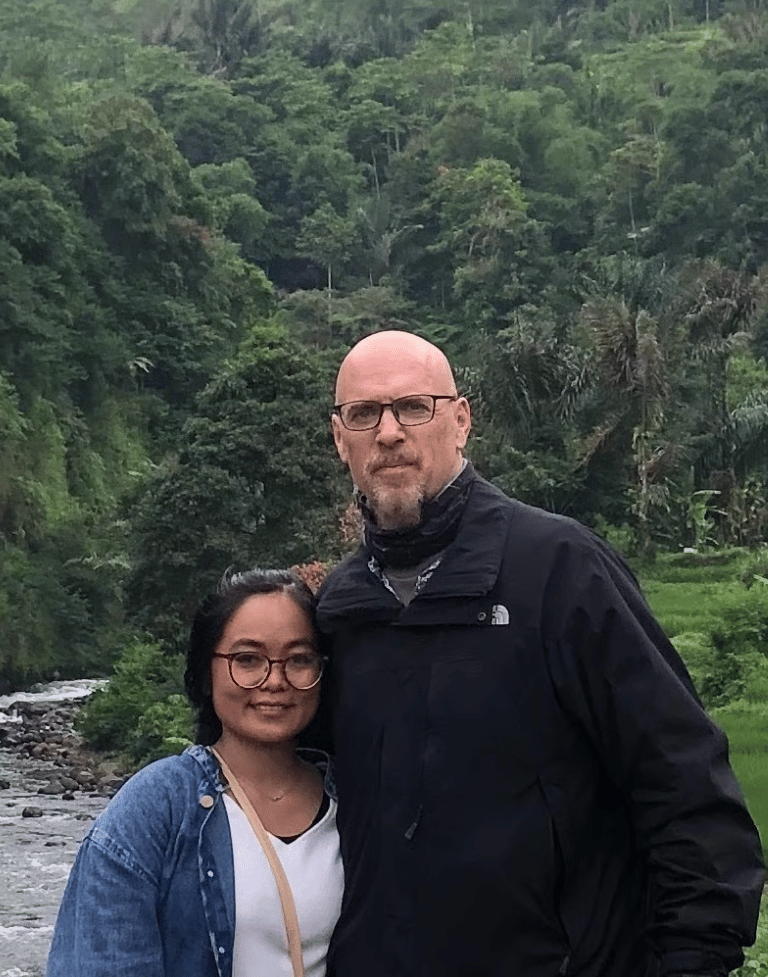
We're a husband-and-wife team. Indonesian/New Zealand.
Nui is a qualified midwife and nurse with experience working at detoxing retreats in Ubud Bali. Along with detoxes she also offers IV drip therapy, cupping therapy, and ozone therapy.
Craig has a background in NLP (Neuro Linguistic Programming) but has focused primarily on detoxing therapy. Having lived, and studied, in India for a number of years he's a proponent of back to basics, holistic therapy/healing.